
Transforming a Century Home for Modern-day Energy Efficiency Dexter House Case Study
The Challenge
Dexter House: Transforming a Century Home for Modern-Day Energy Efficiency
Residential housing in the city of Toronto is an eclectic mix of skyscraper condominiums, charming heritage homes and everything in between. While these older houses add character to the city, they were constructed long before architects and builders thought about the environmental impact.
As these homes age, requiring replacement of key systems, homeowners have the opportunity to upgrade to modern, greener alternatives. Susan Dexter is one such homeowner, who purchased a century home in the city’s Harbord Village, near the University of Toronto, in 1980.
An environmentally conscious person, Susan gradually retrofitted the home with energy-efficient modifications, including solar panels and new windows. When it came time to replace her aging gas furnace and air conditioner, she knew she wanted something extremely eco-friendly.
“I’d like to sell a lot more of the Mitsubishi Electric Zuba Cold Climate heat pumps because I feel good about selling them. It’s a very efficient system that’s incredibly environmentally friendly, especially in Ontario where we have pretty clean electricity.” — Jamieson Murray, Systems Consultant, Belyea Bros. Heating & Cooling
The Solution
Knowing that residential space heating accounts for over 40% of Canada’s greenhouse gas emissions, Susan was determined to find a heating source that wasn’t powered by gas.
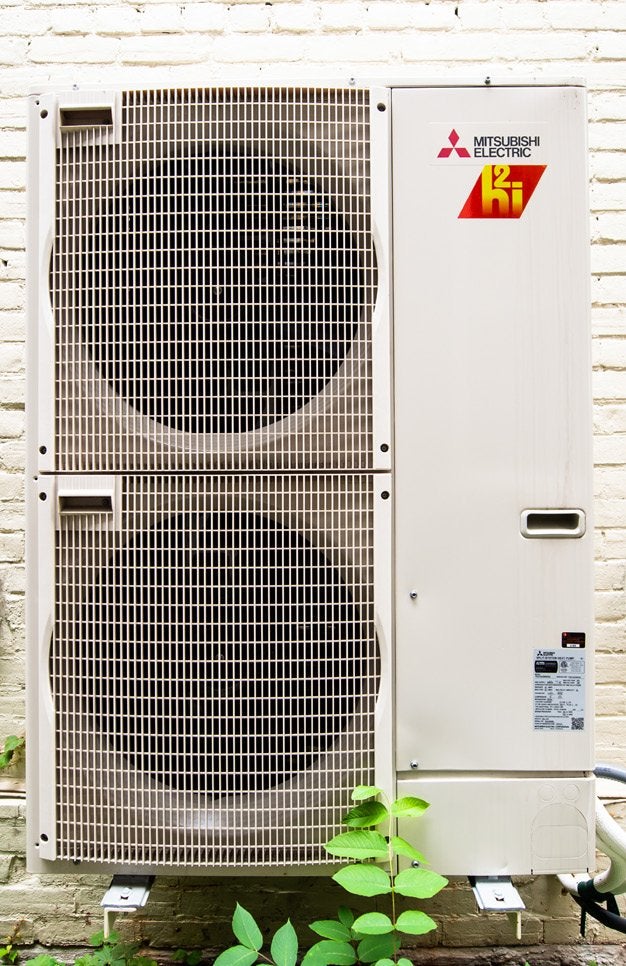
Jamieson Murray, Systems Consultant for Belyea Bros. Heating & Cooling, recommended the Mitsubishi Electric Zuba Cold Climate heat pump as the most energy-efficient solution.
During the summer, the heat pump seamlessly transfers heat energy from the home to the outdoors in order to cool the space. In the winter, it transfers energy from outside the home to indoors, working effectively even in -30°C.*
Murray suggested the Zuba Cold Climate heat pump because it met Susan’s demands for an incredibly environmentally friendly option while being a very reliable piece of equipment. Plus, from past experiences with the company, Murray knew Mitsubishi Electric’s customer service is among the best in the business, quickly answering any questions and offering technical support if needed.
Having previously installed a Mitsubishi Electric heat pump for a third-floor bedroom, Susan had confidence in the brand and wanted to do what was best for the environment, so she decided to go for the Zuba.
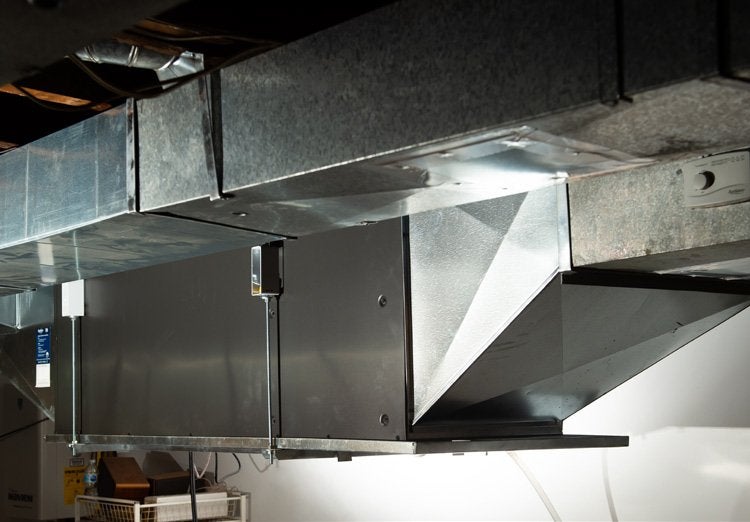
As the air handler is a multi position unit, it is able to be installed vertically or horizontally. As was the case, Susan’s low ceiling basement required a horizontal installation. They used the ducted system that was in place from the previous furnace system to distribute air throughout the house.
“My heat pump is a great machine, it’s a Ferrari. I’m not a rich person, but I’m happy to do my bit for the environment and I’m delighted Mitsubishi Electric has done its bit.” — Susan Dexter, Homeowner
The Results
Installed in November 2020, Susan has one winter with the heat pump under her belt and has been extremely satisfied with the performance and the opportunity for cost savings, as she’s able to heat her home for only $1.44 a day.
“I think we’ve established that gas is way cheaper than electric, but this machine is so efficient that it’s compensating for the gas,” she explains. “ with the carbon tax coming and increasing, the cost advantage of gas will go down over time.”
Between the new heat pump and her induction stove, Susan says she’s been able to cut her household’s gas emissions by 73%. Her energy saving conversion is a model for her community.
As part of her community’s net-zero climate change committee, she volunteered her home to be a test case for how a heat pump would work in the older Victorian houses in the area.
Because it’s performed so well, homeowners in her neighbourhood are now more likely to use the eco-friendly Zuba Cold Climate heat pump when it’s time to replace aging furnaces.
Today, Susan is even working with BetterHomesTO, an organization that helps Torontonians create more climate-friendly homes, to showcase what can be achieved with a heat pump.
Summary
Homeowner: Susan Dexter
Contracting firm: Belyea Bros. Heating & Cooling
Location: Toronto, Ontario
Industry: Residential
Size: 2,000 square feet
Challenges:
Supply full heating and cooling that’s extremely energy efficient for a century home.
Selection Criteria:
- Replace gas furnace and air conditioner
- Reduce greenhouse gas emissions
- Reduce carbon footprint
Design/Engineering Solution:
Mitsubishi Electric outdoor unit models:
- 3-ton cold climate condenser - PUZ-HA36NHA5
- 1-ton cold climate condenser - MUZ-FH12NAH-1
Mitsubishi Electric indoor unit models:
- 3-ton multi position air handler - PVA-A36AA7
- 1-ton wall mount - MSZ-FH12NA
Results:
- Significant energy savings
- Superior performance in winter
- Reduction in carbon emissions
Source reference:
*Units can operate down to -30°C and beyond, depending on conditions.
Frequently Asked Questions
Can a heat pump be used to retrofit an older or century home?
Yes. This project demonstrates how a cold-climate heat pump can be integrated into an older home while making use of existing ductwork. A multi-position air handler also allowed the system to be installed horizontally to accommodate a low basement ceiling.
Can a heat pump replace both a gas furnace and an air conditioner?
Yes. A cold-climate heat pump can provide both heating and cooling from a single system. In this retrofit, the heat pump replaced an aging gas furnace and air conditioner while providing year-round comfort.
Can switching from gas heating to a heat pump reduce household carbon emissions?
Yes. Replacing fossil-fuel heating with an efficient electric heat pump can significantly reduce household carbon emissions. In this project, the homeowner reported a 73% reduction in household gas emissions after switching to the heat pump and an induction stove.